
How Much Money to Save Before Buying a House With Examples and Smart Tips

Buying a house takes more cash than the down payment. Closing costs, move-in expenses, repairs, and an emergency fund all matter. A strong savings target helps avoid stress after the keys are in hand.
This guide is informational only. For personal advice, talk with a lender, real estate agent, tax professional, or financial advisor.
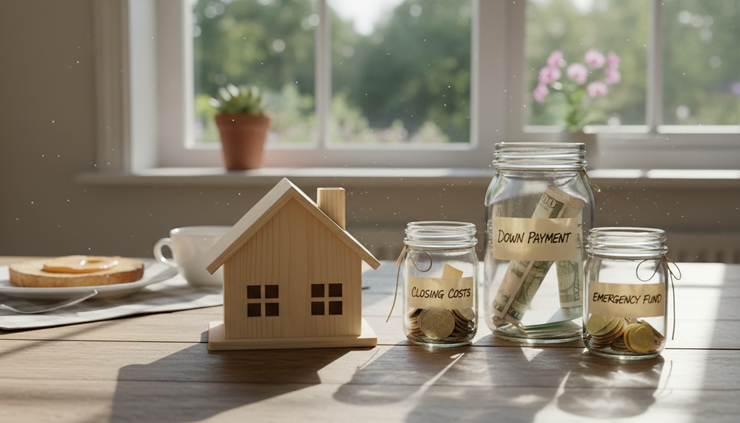
Start with the full cash target, not just the down payment
A simple rule works well:
Save for the down payment, closing costs, emergency fund, and move-in costs before making an offer.
Here are the main buckets.
Cost category | Common range | What it covers |
Down payment | 3% to 20% or more | Your upfront share of the purchase price |
Closing costs | 2% to 5% of the loan amount | Lender fees, title fees, escrow items, taxes, insurance |
Emergency fund | 3 to 6 months of expenses | Protection after moving in |
Move-in and repairs | Varies | Furniture, appliances, paint, tools, small repairs |
A 20% down payment can help avoid private mortgage insurance on many conventional loans. But many buyers purchase with less. Some loan programs allow 3%, 3.5%, or 5% down. VA and USDA loans may allow 0% down for eligible buyers, though closing costs and reserves still matter.
The right amount depends on the loan, income, debts, local prices, and comfort level.
Down payment examples by home price
Here is a quick look at common down payment amounts.
Home price | 3% down | 3.5% down | 5% down | 10% down | 20% down |
$250,000 | $7,500 | $8,750 | $12,500 | $25,000 | $50,000 |
$400,000 | $12,000 | $14,000 | $20,000 | $40,000 | $80,000 |
$650,000 | $19,500 | $22,750 | $32,500 | $65,000 | $130,000 |
A smaller down payment can get you into a home sooner. The tradeoff is a larger loan payment. You may also pay mortgage insurance. A larger down payment lowers the loan balance and may make monthly costs easier to manage.
Do not empty every account for the down payment. A house can need repairs in the first month. Leave cash available.

Closing costs can add thousands
Closing costs often surprise buyers. They are separate from the down payment unless negotiated otherwise.
Typical closing costs may include:
Loan origination fees
Appraisal fee
Credit report fee
Title search and title insurance
Escrow or settlement fees
Prepaid homeowners insurance
Prepaid property taxes
Recording fees
Initial escrow deposits
For a $400,000 home with a $380,000 loan, closing costs at 3% of the loan would be about $11,400. At 5%, they would be about $19,000.
Some buyers ask the seller to pay part of the closing costs. This can help, but it depends on the market, loan rules, and seller motivation. In a competitive area, a seller credit may make your offer less attractive.
Build an emergency fund before moving in
Homeownership adds costs renters may not face. A water heater can fail. A roof can leak. Property taxes can rise. Insurance premiums can change.
Aim to keep three to six months of essential expenses after closing. Essential expenses include:
Mortgage payment
Utilities
Food
Transportation
Insurance
Minimum debt payments
Childcare or medical needs
If income is stable and the house is newer, three months may feel reasonable. If income varies or the home is older, six months gives more breathing room.
Also set aside a starter repair fund. Even $2,000 to $5,000 can help with early fixes, tools, paint, locks, cleaning, and basic upgrades.
Realistic savings examples in different locations
Home prices and taxes vary a lot by location. Use these examples as planning tools, not exact quotes.
Lower-cost market example
A buyer wants a $250,000 home in a smaller Midwest city.
Savings item | Estimate |
5% down payment | $12,500 |
Closing costs at 3% | $7,125 |
Emergency fund | $12,000 |
Move-in and repairs | $3,000 |
Total target | $34,625 |
This buyer does not need 20% down to be prepared. The key is keeping cash after closing.
Mid-priced suburban example
A buyer wants a $400,000 home in a growing suburb.
Savings item | Estimate |
10% down payment | $40,000 |
Closing costs at 3% | $10,800 |
Emergency fund | $18,000 |
Move-in and repairs | $5,000 |
Total target | $73,800 |
This plan gives a stronger down payment and a useful cash cushion.
High-cost city example
A buyer wants a $650,000 condo or single-family home in a coastal market.
Savings item | Estimate |
10% down payment | $65,000 |
Closing costs at 3% | $17,550 |
Emergency fund | $30,000 |
Move-in and repairs | $7,500 |
Total target | $120,050 |
In higher-cost areas, the down payment is only part of the challenge. Taxes, insurance, HOA fees, and repair costs can also run higher.

Smart ways to reach your savings goal
Start with a target number. Then break it into monthly steps.
For example, if the goal is $36,000 in three years, the target is $1,000 per month. If that number feels too high, adjust the timeline, home price, or down payment plan.
Use these habits:
Open a separate home savings account
Keep the money away from daily spending.
Automate transfers
Move money right after each paycheck.
Cut one large recurring cost
A car payment, unused subscriptions, or frequent takeout can slow progress.
Save windfalls
Tax refunds, bonuses, gifts, and overtime can shorten the timeline.
Track your debt-to-income ratio
Lower debt can improve loan options and buying power.
Pause major new debt
A new car loan or large credit card balance can hurt mortgage approval.
Review the plan every few months. Income changes. Rates change. Home prices change. A flexible plan keeps you moving.

FAQ
Is $10,000 enough to buy a house?
It can be enough in some cases, especially with a low-down-payment loan, down payment assistance, or a lower-priced home. But closing costs and emergency savings may require more.
Should I save 20% before buying?
A 20% down payment is helpful, but not always required. Many buyers purchase with less. Compare the monthly payment, mortgage insurance, and cash left after closing.
How much should I save for closing costs?
A common planning range is 2% to 5% of the loan amount. Ask lenders for loan estimates so you can compare real numbers.
Should I use all my savings for the down payment?
No. Keep an emergency fund. Owning a home with no cash left can turn small problems into major stress.
What is the best first step?
Check your budget, credit, debt, and savings. Then get estimates from a lender. For guided help, contact Ask Real Advisors before you start house hunting.
The takeaway
The best savings target includes more than the down payment. Plan for closing costs, emergency reserves, and move-in expenses too.
A good starting formula is:
Down payment + closing costs + 3 to 6 months of expenses + move-in money
That number may feel large at first. Break it into monthly goals. Choose a home price that fits your income. Keep cash after closing. That is how buying a house becomes a prepared decision, not a financial scramble.


Comments